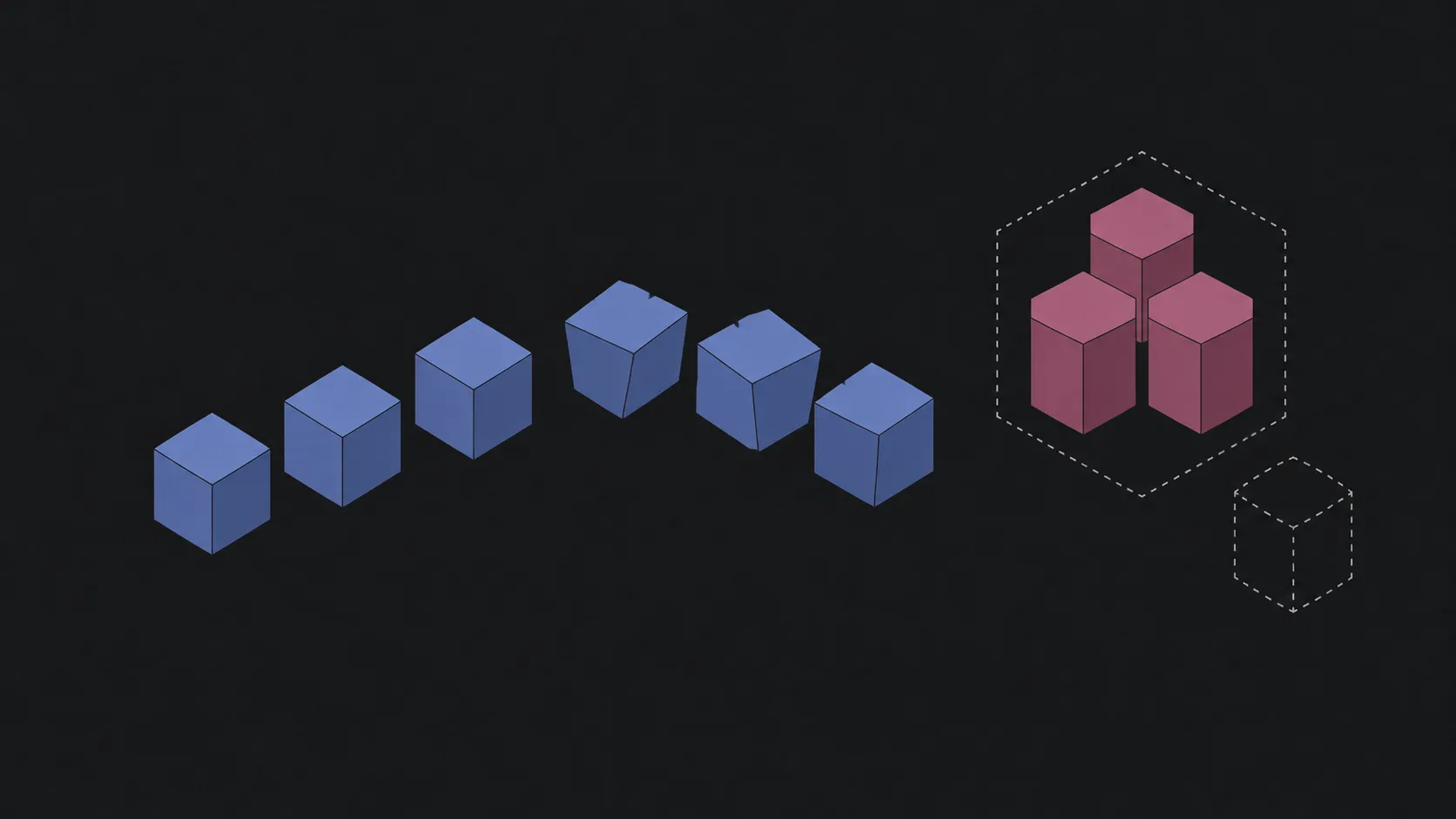
We are rewarded for adding things.
Features. Tools. Processes. Commitments.
That is what progress looks like.
The problem is that adding is easy to justify.
Why “doing something” wins
You could see this pattern clearly during the pandemic. There was constant pressure to act, to respond, to add measures as situations changed. Adding something signaled responsibility. Removing something was harder to defend, because it carried visible risk.
The same pressure shows up everywhere, just on a smaller scale.
In a project, adding a tool looks like improving the system.
Changing a setup looks like simplifying things.
Expanding scope looks like doing a more complete job.
Not adding anything looks like doing nothing.
What that leads to
I have run into this repeatedly in small decisions.
There was a push to add another infrastructure scanning tool. It sounded reasonable. But the product value was limited, and the overhead was real. So we didn’t add it.
We considered switching the local development setup to something that was supposed to simplify things. It would have added another layer. So we didn’t switch.
On a smaller project with a tight budget, the constraint forced clarity. Instead of expanding scope, we kept the solution as simple as possible.
None of these decisions are dramatic.
But they all go against the same pressure: add something.
The cost shows up later
Every addition creates something you have to carry.
More code. More systems. More moving parts. More decisions later.
That cost is mostly invisible when you add it.
It becomes very visible when you have to maintain it.
Adding is easy. Carrying is expensive.
It is not just about systems
The same pattern shows up in how you use your time.
There is a constant pull to do something useful with it. To take opportunities. To improve something. Empty space feels like wasted potential.
So you fill it.
Another plan. Another commitment. Another thing to work on.
Saying yes is easy to justify. It looks like progress.
Saying no, or leaving space intentionally empty, is harder to defend, even to yourself.
What I default to now
I try to keep the filter simple:
- Does this solve a real problem right now?
- Does it make things simpler or more complex?
- Will I still want to maintain this later?
If the answer is unclear, I try not to add it.
Not because adding is always wrong.
But because adding is the path of least resistance.
Closing
Adding things is easy to justify.
Not adding is harder to defend.
But most of the long-term cost sits on the things you decide to carry.
The goal is not to build everything that could make sense.
It is to build only what you are willing to carry.