You are putting in the effort.
You train. You practice. You study. You show up consistently.
And nothing seems to change.
That is the plateau.
It feels like something is broken. Like progress has stalled. Like whatever worked before is no longer working.
But most of the time, that interpretation is wrong.
The expectation problem
We tend to expect progress to be visible and roughly linear.
A little better each week. Small, steady improvements. Clear feedback that the effort is paying off.
That is how progress looks in theory.
In practice, it rarely works that way.
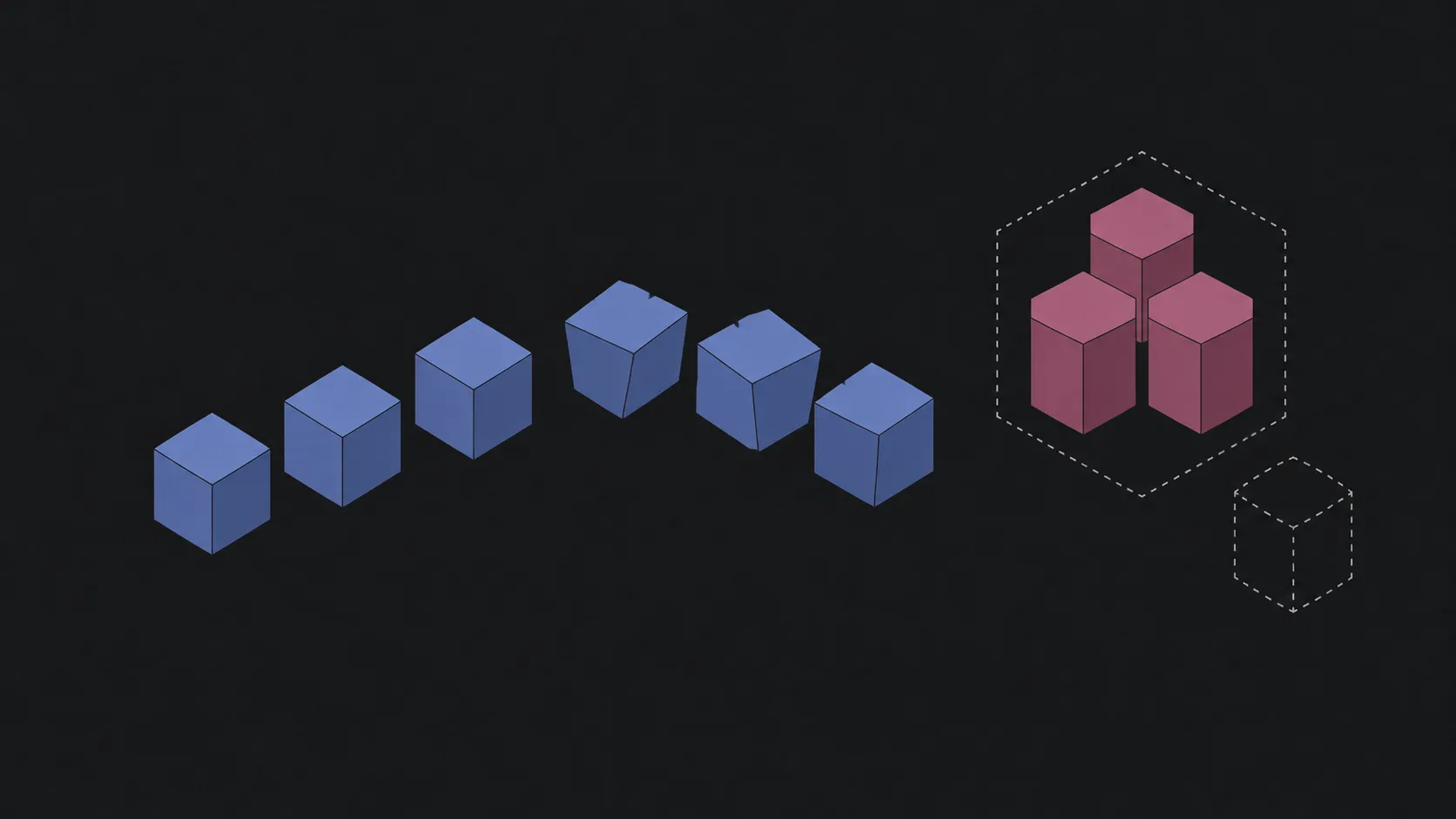
Progress is uneven. It comes in bursts, separated by long periods where nothing obvious seems to happen.
Those flat periods are where most people start doubting the process.
What plateaus actually are
A plateau is not usually a lack of progress.
It is a lack of visible progress.
Under the surface, something is still changing.
In skill-based domains, that often means consolidation. Patterns are being repeated, small errors are being corrected, and the system is stabilizing. None of that shows up immediately as a clear improvement.
Then, at some point, it does.
The visible change comes later, often suddenly, after a period that felt completely flat.
What it looks like in practice
You see this pattern across different areas.
In training, progress rarely shows up session by session. You can run at the same pace for weeks, with similar heart rate, and feel like nothing is improving. Then one day, the same effort suddenly feels easier.
In language learning, there are long stretches of confusion. You watch, read, and listen without fully understanding. Then something clicks. Sentences that felt opaque become clear.
In music, repetition often feels unproductive. You play the same parts over and over without noticing much change. Then fluency appears, almost all at once.
In each case, the work during the plateau mattered. It just did not produce immediate feedback.
The common mistake
Flat periods trigger a predictable reaction.
We assume the system is no longer working.
So we change it.
We optimize. We add structure. We try something new. Or we stop altogether.
Sometimes that is necessary. But often it is premature.
We react to the absence of visible progress, not to the absence of actual progress.
A different way to read plateaus
It helps to treat plateaus as part of the process rather than as a signal that something is wrong.
Not all progress is immediately observable.
If the inputs are still consistent, and the system is still being applied, a flat period does not necessarily mean failure. It may just mean that the visible output is delayed.
That does not make plateaus pleasant.
But it makes them easier to tolerate.
What changes
This shifts the question.
Instead of asking:
“Why am I not improving?”
A better question is:
“Am I still applying a system that has worked before?”
If the answer is yes, then the plateau might not require intervention. It might just require time.
Progress is not a straight line.
And the part where it looks flat is often where the work is actually happening.