Goal
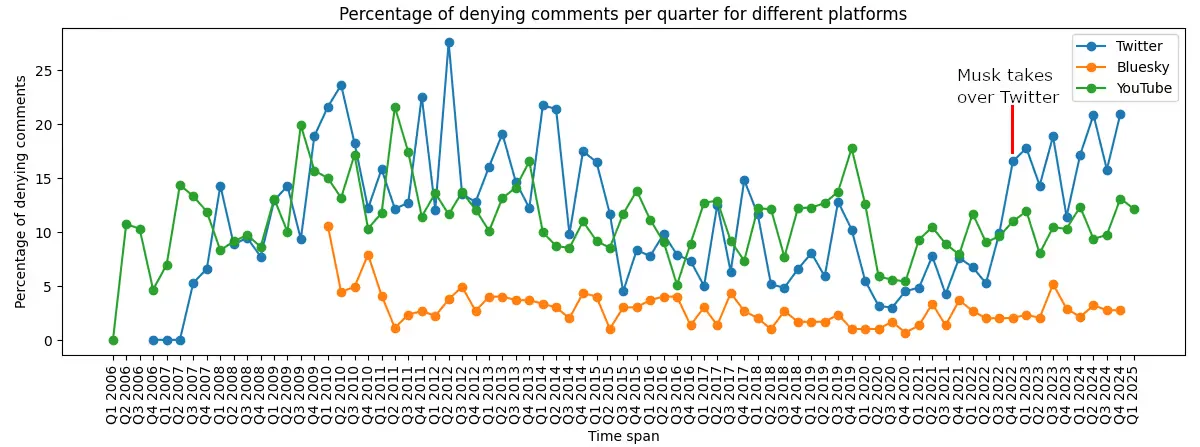
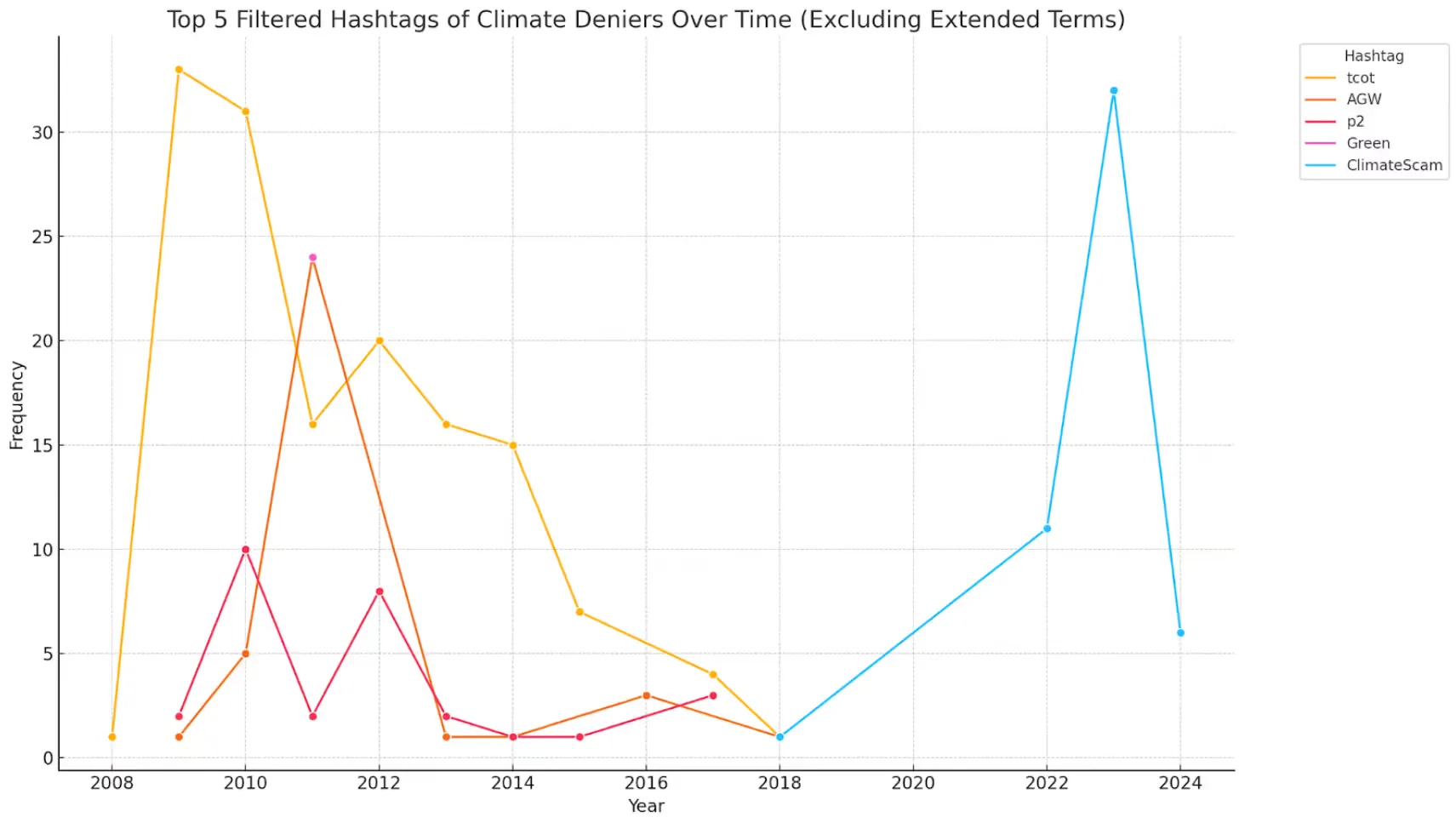
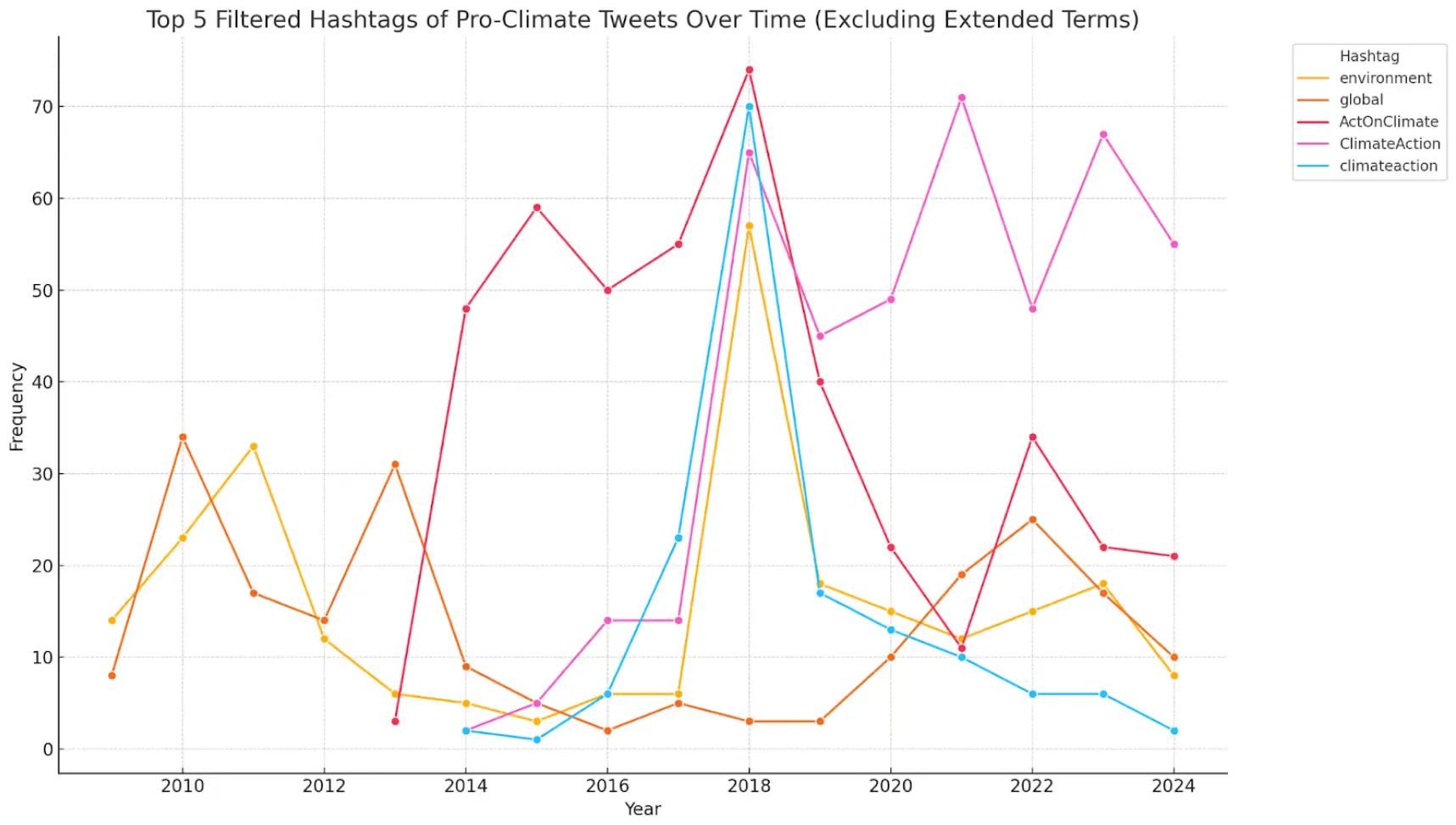
Analyze how public sentiment around climate change evolves over time by applying NLP techniques to social media data, and relate these trends to real-world events.
Rather than relying on generic sentiment models, the project focused on adapting language models specifically to climate-related discourse.
Stack
The project was built in Python using BERT-based models for text classification. Data was collected from Twitter, YouTube, and Bluesky, then processed through custom preprocessing pipelines. Supporting tooling covered web scraping, model training, evaluation, and visualization to ensure reproducibility.
Key Decisions
Instead of using off-the-shelf sentiment classifiers, we fine-tuned a general-purpose BERT model on climate-related text. This improved domain understanding and produced more meaningful sentiment trends compared to sentiment-optimized baselines.
The pipeline was designed to handle noisy, real-world social data, with an emphasis on reproducible experiments and interpretable outputs rather than raw model performance.
Outcome
A domain-adapted sentiment analysis system capable of identifying climate-specific discourse patterns and trend shifts across platforms. The project demonstrated that targeted fine-tuning can outperform generic sentiment models when analyzing specialized topics.
Further Details
Analyzing Climate Opinions is a research project exploring how public perception of climate change changes over time across multiple social platforms. I worked on model adaptation, preprocessing pipelines, benchmarking, and visualization, helping turn large volumes of unstructured text into interpretable sentiment trends.
The project combines practical NLP engineering with exploratory analysis, focusing on clarity, reproducibility, and meaningful domain-specific insights rather than abstract accuracy metrics.